In the world of industrial applications, chrome flanges play an important role in ensuring the smooth flow of fluids and gases. These components are essential for connecting and sealing pipes in various settings. In this guide, we will delve into the world of chrome flanges, examining their composition, uses, and practical advantages in industrial applications.
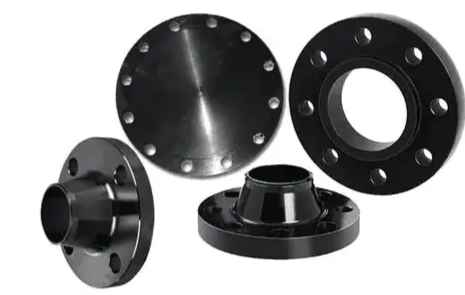
Image Source: Texas Flange
Chrome Flanges: A Closer Look
Chrome flanges belong to a category of materials similar to carbon steel but with an added chromium content. They are a practical and cost-effective choice, primarily when compared to stainless steel. Common grades include F11, F22, F5, and F9, all falling under the ASTM A182 specification.
Specialized Selection
The choice of chrome flanges depends on the level of chromium content required for your specific application. F11 and F22 are suitable when chromium content is not a primary concern, or when replacing outdated A182 F1 flanges. If your application demands higher chromium content, F5 and F9 are better suited.
Mechanical Properties
Each subset of chrome grade flanges, designated under A182, has different mechanical properties. For instance, F11 chrome subsets are divided into Class 1, 2, and 3, each with higher yield strength, tensile strength, and hardness values.
Image Source: Texas Flange
Chrome Moly Flanges vs. Stainless Steel
Chrome moly flanges offer a chromium content level between common stainless steel grades like 304 and 316. This unique composition provides several advantages, such as superior hardness and resistance to oxidation and corrosion.
Application Diversity
Chrome moly flanges find use in various applications, particularly in connecting pipes, valves, pumps, and equipment to form piping systems. They excel in applications involving corrosive or high-temperature fluids or gases. Industries benefiting from chrome moly flanges include oil and gas, refineries, power generation, and chemical processing.
Polished Chrome-Plated Brass Flanges
In addition to chrome moly alloy flanges, there are polished chrome-plated brass flanges designed to fit 5/8 inch diameter tubing. These are ideal for use as closet rods or curtain rods and come in kits ranging from 2 to 6 feet. Each kit includes two chrome flanges and one piece of 5/8 inch OD PNB SS tubing cut to your specified length.
Customization Options
These versatile flanges can be powder-coated in various finishes to match your decor. Please note that lead times for special finishes may vary, and special-finished materials are non-returnable.
Additional Specifications
For those seeking precise details, here is a breakdown of the trade names, grades, UNS numbers, and flange types covered by A/SA182.
Specifications and Standards
The A/SA182 specification covers forged low alloy flanges for use in pressure systems, and products are limited to a maximum weight of 10,000 lb. For larger products and different applications, refer to Specification A/SA336 / A/SA336M for similar low alloy grades.
Image Source: Texas Flange